Trim and extend
trim removes a border of nearly uniform colour, using the top-left pixel at that point of the pipeline as the background. extend adds canvas. Their order decides whether the padding survives.
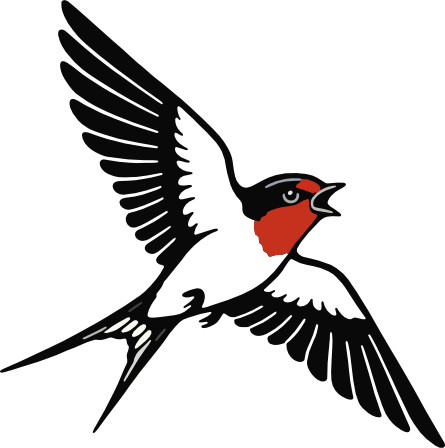
let emblem = try Hokusai(url: URL(fileURLWithPath: "emblem.png")).resize(width: 160).flatten(background: .white)
// Pad, then trim: trim removes the padding it just got, because it matches the top-left pixel.let padThenTrim = try emblem.extend(top: 30, left: 30, bottom: 30, right: 30,                                    mode: .background(.white)).trim()// Trim, then pad: the padding is added after the border is gone, so it stays.let trimThenPad = try emblem.trim().extend(top: 30, left: 30, bottom: 30, right: 30,                                           mode: .background(.white))
for (name, pipeline) in [("pad-then-trim", padThenTrim), ("trim-then-pad", trimThenPad)] {    let output = try await pipeline.png().data()    print(name, "→", output.info.width, "×", output.info.height)    try output.data.write(to: URL(fileURLWithPath: "\(name).png"))}
extend → trimPNG · 160 × 160 · 7 KB 
trim → extendPNG · 220 × 220 · 8 KB
| Order | Size | Why |
|---|---|---|
extend(30) then trim() |
160 × 160 | The white padding matches the top-left pixel, so trim removes it |
trim() then extend(30) |
220 × 220 | There was nothing to trim (the emblem touches all four edges), then padding is added and stays |
To normalise logos or screenshots with arbitrary borders to an exact padded size, trim first and extend last. If you extend with a colour that matches the image’s border, a later trim will undo it.